
Hymn Story #1 — It Is Well with My Soul
Known in Korean hymnals as No. 413, “내 평생에 가는 길.” Behind this hymn is the story of one family.
Our Hymn Story reel told this story in a few seconds; here it is in a little more detail. Dates and names come from sources we could check, and where something is handed down by tradition, we say so.
November 1873, the Atlantic
Horatio G. Spafford was a Chicago lawyer and a Presbyterian elder. In the fall of 1873 he planned a trip to Europe with his wife, Anna, and their four daughters. Business that came up just before departure kept him in Chicago, so he sent Anna and the girls ahead on the French liner Ville du Havre, expecting to follow a few days later.
On November 22, 1873, in the middle of the Atlantic, the Ville du Havre was struck by the British sailing ship Loch Earn and sank quickly. 226 people died, among them the four Spafford daughters: Annie, Maggie, Bessie, and Tanetta.
“Saved alone”
Anna was found floating in the water and rescued. Days later the survivors were landed at Cardiff, Wales, and from there she cabled her husband in Chicago.
Saved alone. What shall I do.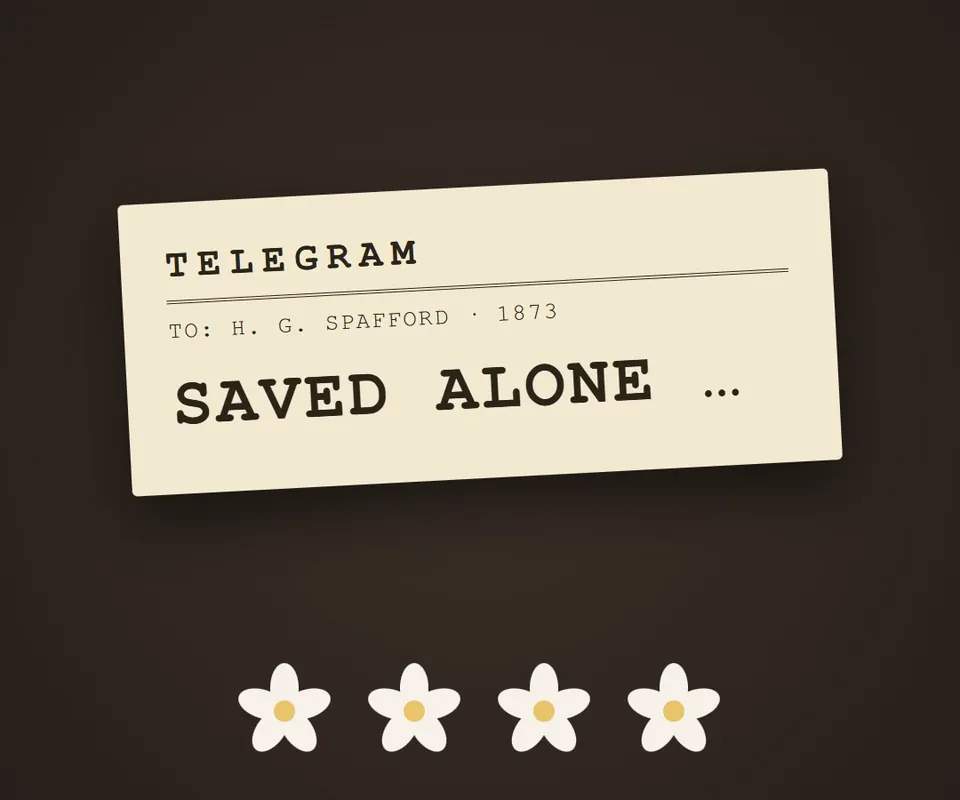
On the sea, on his way to her
Spafford left at once to join his wife. It is said that he wrote this poem as his ship passed near the place where his daughters had died.
Accounts differ a little on exactly when and where the words were written. What is clear is that, after a grief almost too heavy to bear, he could still confess, “It is well with my soul.”
From a poem to a hymn
Philip P. Bliss, a gospel songwriter and friend of the Spaffords, set the poem to music. He named the tune VILLE DU HAVRE, after the ship the girls had sailed on.
The hymn was first published in 1876 in Gospel Hymns No. 2, compiled by Bliss and Ira D. Sankey. Korean churches sing it as Hymn No. 413, “내 평생에 가는 길” (No. 470 in the older Unified Hymnal).
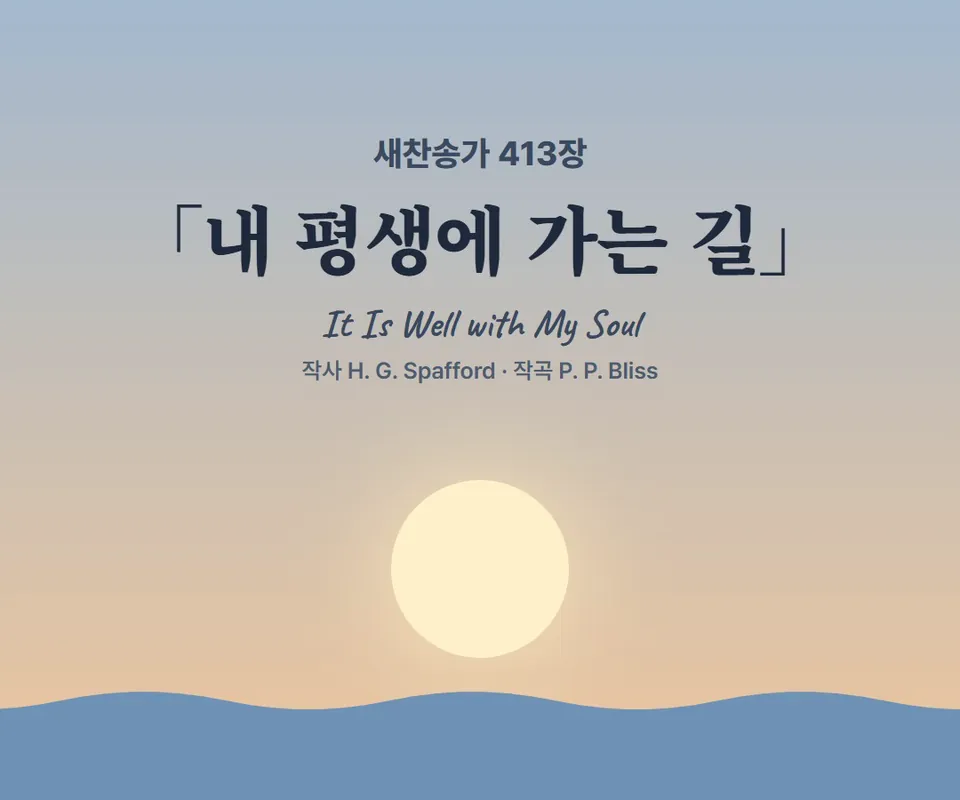
The hymn at a glance
- Title
- It Is Well with My Soul
- Words
- Horatio G. Spafford, 1873
- Music
- Philip P. Bliss · tune VILLE DU HAVRE
- First published
- Gospel Hymns No. 2 (1876)
- Korean hymnal
- New Hymnal No. 413 “내 평생에 가는 길” · Unified Hymnal No. 470
The original English text
When peace, like a river, attendeth my way,When sorrows like sea billows roll;Whatever my lot, Thou hast taught me to say,It is well, it is well with my soul.
It is well with my soul,It is well, it is well with my soul.
Though Satan should buffet, though trials should come,Let this blest assurance control,That Christ has regarded my helpless estate,And hath shed His own blood for my soul.
My sin, oh, the bliss of this glorious thought!My sin, not in part but the whole,Is nailed to the cross, and I bear it no more,Praise the Lord, praise the Lord, O my soul!
And Lord, haste the day when my faith shall be sight,The clouds be rolled back as a scroll;The trump shall resound, and the Lord shall descend,Even so, it is well with my soul.
Horatio G. Spafford, 1873 · public domain. These are the four stanzas most hymnals print today (the manuscript had more).
A closing thought
This was not a song sung in the absence of sorrow, but a confession made in the middle of it.
We pray that the same peace he could confess before an unbearable grief will be with us, too, as we sing this hymn today.
Sources
- Wikipedia — It Is Well with My Soul — Date, ships, tune, 1876 publication
- Wikipedia — Horatio Spafford — The four daughters, the telegram
- Discipleship Ministries (UMC) — History of Hymns: “It Is Well with My Soul” — The voyage, the Loch Earn, “Saved alone”
- Hymnary.org — When peace, like a river, attendeth my way — Date of text, first publication, English text
- The Cyber Hymnal — It Is Well with My Soul — English text (cross-check)
- Library of Congress — Family Tragedy (exhibition) — The telegram of December 1, 1873
- 갓피플 — 새찬송가(한영) 413장 — Korean title and number
- hbible — 새찬송가 413장 — Korean title and number