
Three things that get in the way of congregational singing — new songs, team timing, keys set too high
When you're leading worship, do you know the moment the congregation suddenly gets quieter?
Part 1 looked at what a worship leader is actually for, and part 2 at how to check whether we're carrying that responsibility well. Part 2's second check was "Did the congregation follow along without getting lost?" Part 3 is the practical answer to that question. We split the moments when the room goes quiet into three, and walk through what to prepare before Sunday for each — in a bit more detail than the reel.
We can't produce grace, but we can remove obstacles
If you lead worship, you know the moment: the singing that filled the room a second ago drops, and a few people are just reading the screen. As we said in part 2, some people worship deeply while sitting quietly, so a quiet room isn't always a problem. But when many people stop at the same spot, it usually means something there is hard to sing along with.
Grace is God's to give; a leader can't manufacture it. But the things that keep people from focusing — an unfamiliar melody, a band falling apart, a note that's out of reach — we can prepare for and reduce. Technique doesn't replace grace, but clearing obstacles out of the way of the congregation's confession to God is part of what a leader has been given to do.
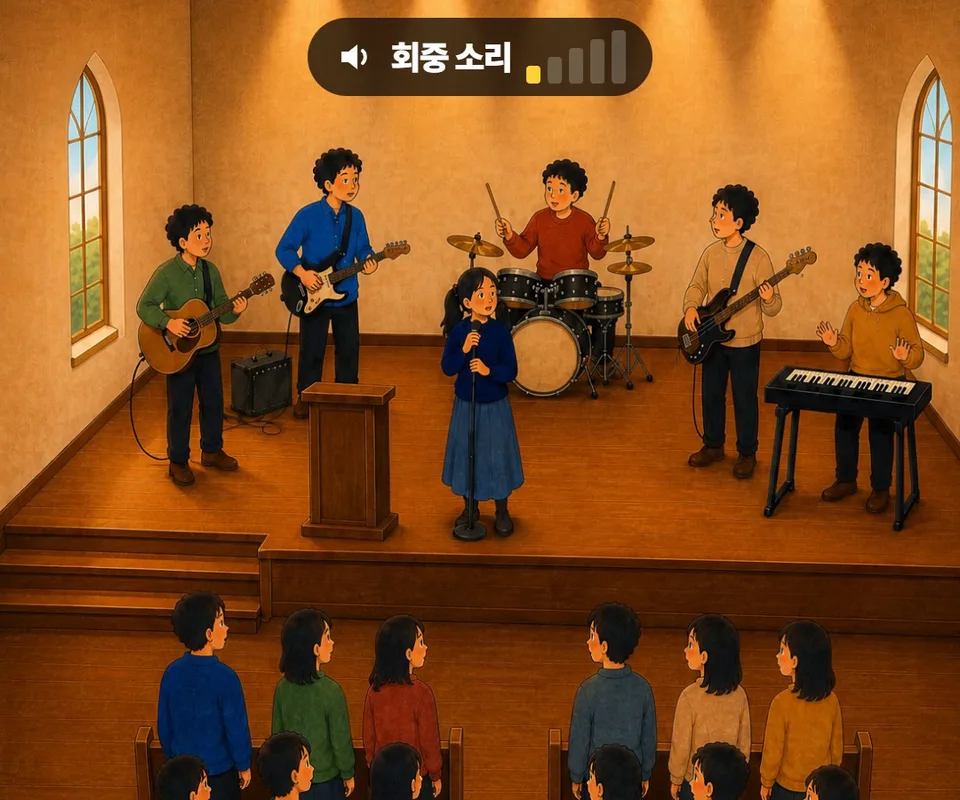
1 — A song they've never sung
The most reliable place for the room to go quiet is a song people are singing for the first time. If you don't know the melody, you end up listening instead of singing. The team has run it several times in rehearsal, so it's easy to forget the congregation is hearing it for the first time on Sunday.
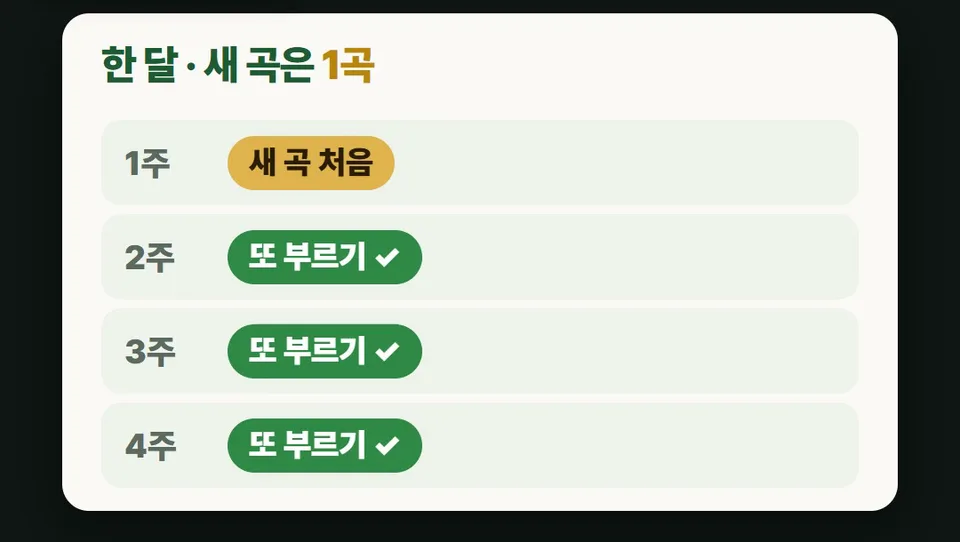
So add about one new song a month and keep singing it for a few weeks. The first week it's unfamiliar; the second, some people join on the chorus; by the third it belongs to the congregation. Put in two or three new songs every week and the congregation spends every service just listening.
- One a month: pick about one new song per month and write it down first when you plan the month's sets.
- Keep it going: sing it again the next week and the week after — three to four weeks in a row. The position in the set can change.
- Between familiar songs: on the first week, place the new song between songs the congregation knows well.
- A clear first verse: on the first week, the leader sings the first verse melody clearly and the band keeps it simple so the melody carries.
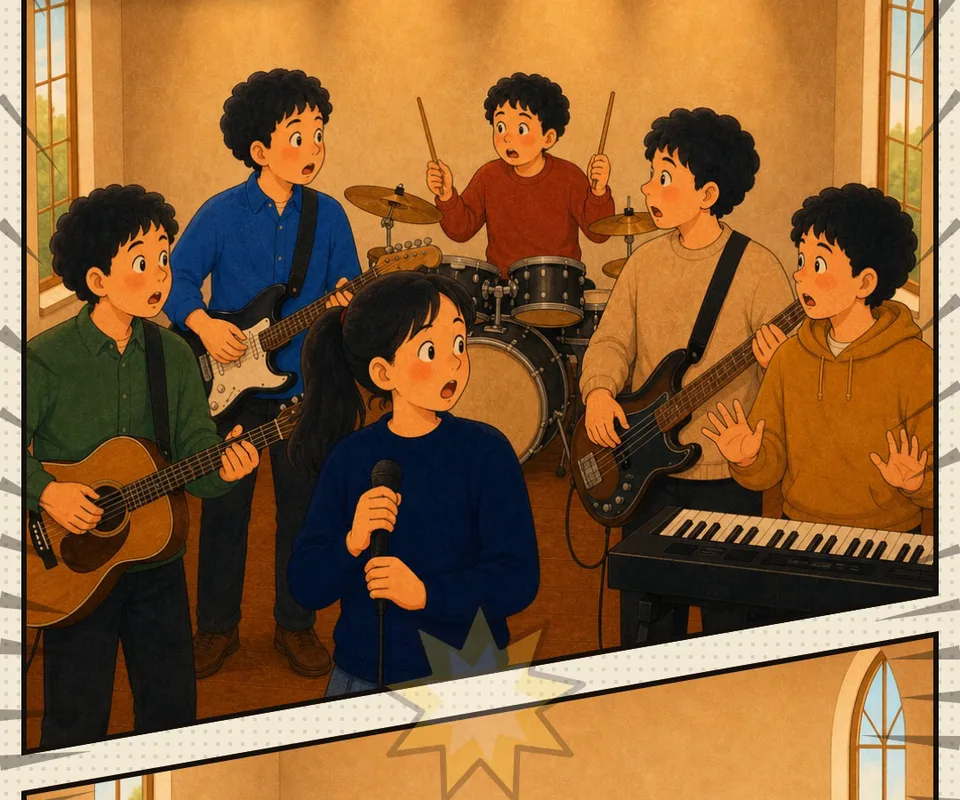
2 — When the team falls out of step
The second is when the worship team isn't breathing together. Even on a song everyone knows, if the team splits apart at a section everyone is supposed to hit together, the congregation stumbles there too. Think of heading into the chorus while the keys go to verse 2 and the drums try to end. The congregation follows the team, so when the team wobbles, the room wobbles with it.
Three ways to cut this down:
- Lock in the song form. Decide the order — intro, verse 1, chorus, verse 2, chorus, bridge, chorus — before rehearsal, send it to everyone, and don't change it right before Sunday.
- Simplify on Sunday whatever was hard in rehearsal. A bridge rhythm that fell apart several times, or a new instrumental, can stay simple on Sunday. You can build skill at the next rehearsal.
- The congregation doesn't know how many times you'll repeat the chorus, so sing the next line first and give the team a hand signal. Just before the chorus ends, sing the first words of the next line — the congregation hears "one more time" and comes with you.
| Signal | Meaning (example) |
|---|---|
| Circle a raised index finger | One more chorus (repeat) |
| Show a number with your fingers | Go to that verse or section (e.g. 2 = verse 2) |
| Press a flat palm down | Bring it down (drop instruments, let the congregation carry it) |
| Make a fist | This is the last time — end |
Using the signals in rehearsal matters more than deciding them. Try them once or twice midweek and the team gets in the habit of watching the leader on Sunday. And since the signals are for the team, not the congregation, keep them short and at a height the team can see rather than big and showy.
3 — When the key is too high
The third is when the song is pitched too high. A key that's comfortable for the leader can be high for the congregation. Leaders use their voices every week, and recordings are usually set for a trained singer's range. Use that key as is, and even on a familiar song the singing drops right at the highest stretch.
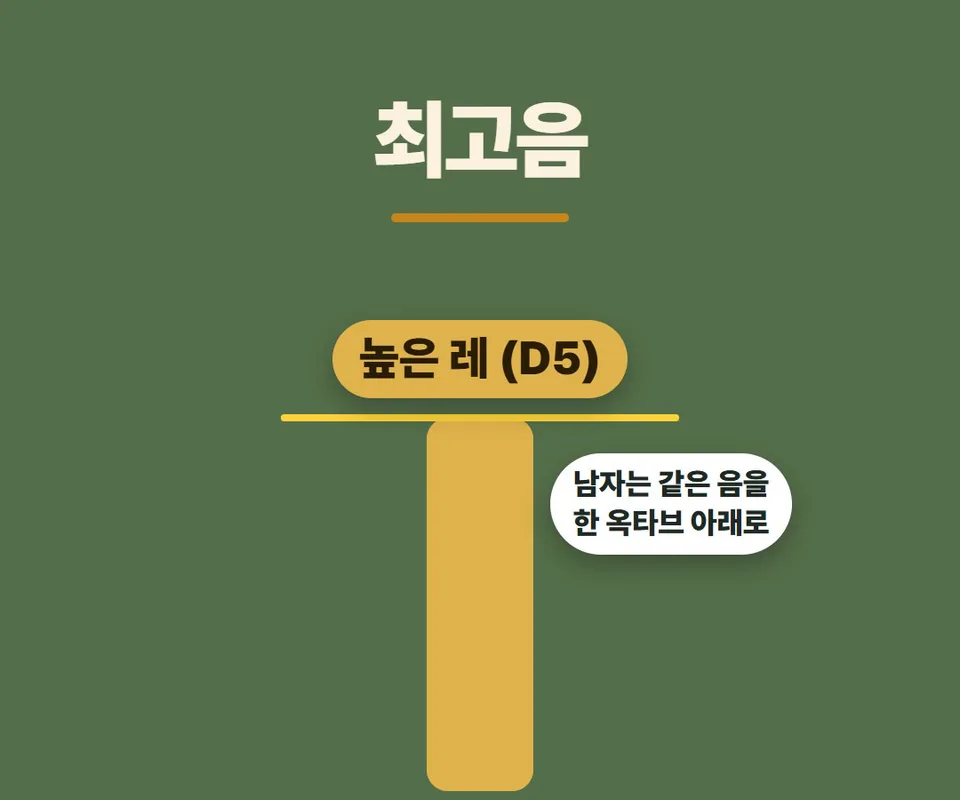
Remember one line: keep the highest note at or below D5. Middle C is C4; the C an octave above is C5, and the D above that is D5. Men sing the same note an octave lower, so a male leader setting the key by his own voice should picture this line an octave down — the D just above middle C (D4).
- When planning the set, check each song's highest note — just find the single highest note on the chart.
- If it's above D5, lower the key, usually by a whole step (e.g. E → D).
- If you need to drop only a half step and the chords get awkward, play the shapes a whole step lower with capo 1 (e.g. E♭ = D shapes, capo 1).
- A quieter room isn't always the key. Often the band is too loud at that spot for people to hear themselves, so check instrument levels before lowering the key.
The same form and key for every team
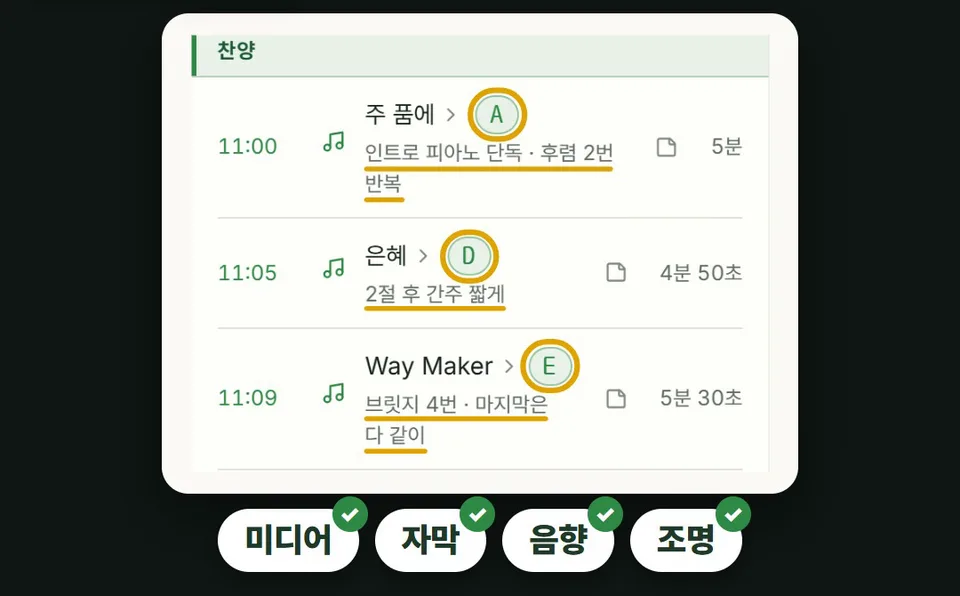
The form and key you've settled on aren't just for the worship team. They need to reach media, lyrics, sound, and lighting exactly the same way, or Sunday still wobbles. If you lowered a key, tell keys, bass, and sound separately — otherwise Sunday may start in the original key. If the leader goes to one more chorus while the lyrics team flips to the next song, or the bridge was supposed to drop but the sound team didn't know, the congregation stumbles again even though the band is together.
So write the form and key in one place and have every team look at the same thing. Post photos of the set in a group chat and every revision adds another photo — by Sunday morning, it's hard to tell who's looking at an old version.
In Com2Worship you can note the key and song form (I V1 C V2 C B …) on every song in the service order. Edit the order and everyone viewing that service sees the updated version, and the live screen shows the current song's key and form at the top of the chart. Not just the worship team — media, lyrics, sound, and lighting can all work from one service order.
We prepare faithfully; grace is God's
Even with all three handled, some Sundays will be quiet. That's all right. Grace is God's to give, and what He asks of a leader is faithfulness in what we've been given. Our part is to clear the obstacles, one at a time, from the congregation's path as they confess their faith to God.
When you plan this week's set, check three things: no more than one new song, a song form that's locked in and sent to every team, and a highest note no higher than D5.