
How a worship team changes key — why, how, and what to watch out for
Do you change key a lot when you plan your sets?
The reel covered three things worth knowing about key changes: why we do them, how, and what to watch out for. This article unpacks those three and adds what the reel didn't have room for — why the 5 chord leads into the new key, how to adjust the progression to the song's tempo or the next song's key, and what to agree on so the whole team crosses over in the same bar.
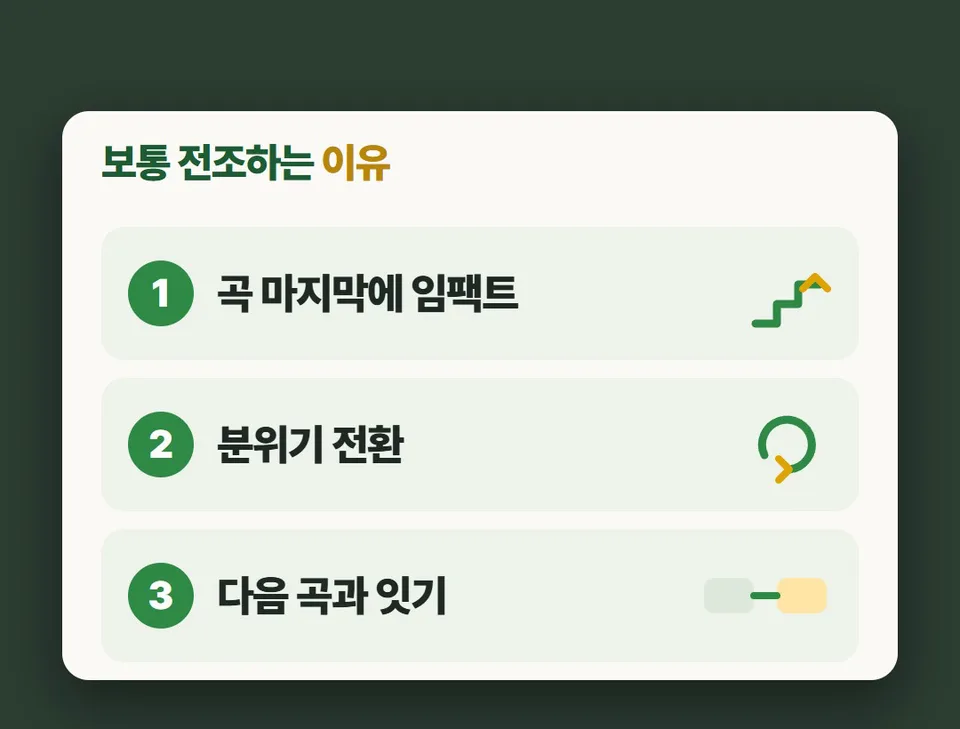
1 — Why change key?
There are usually three reasons.
- To give the end of a song more lift. After singing the same chorus several times, raising the last one a half or whole step makes the same melody sound brighter and stronger.
- To shift the mood. Even inside one song, a new key changes the color of the sound and signals a move into a different flow.
- To move naturally into a next song in a different key. If a song in G is followed by one in A, you can carry into the new key without stopping.
Because a new key changes the feel, it can also draw the congregation's focus back in. A mind that drifted a little on the third time through the chorus can come back to the words in the new key.
But a key change is a tool to help the congregation keep singing together, so more isn't better. Skip it on a new song people are still learning, don't change key twice in one song, and don't do it on every song in the set. When people are still following the melody, a key change makes them stumble.
2 — How do you change key?
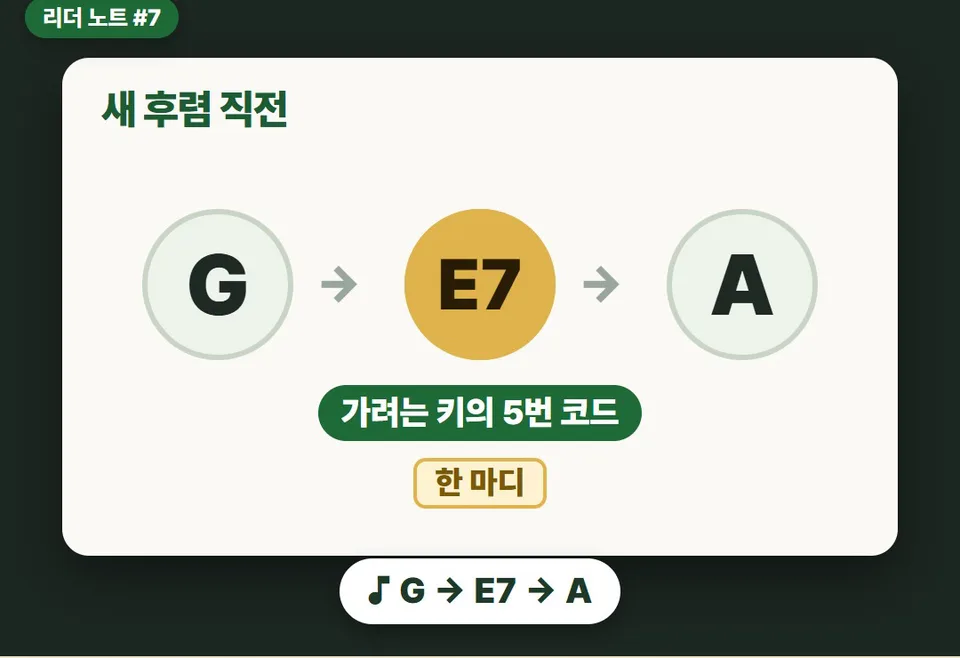
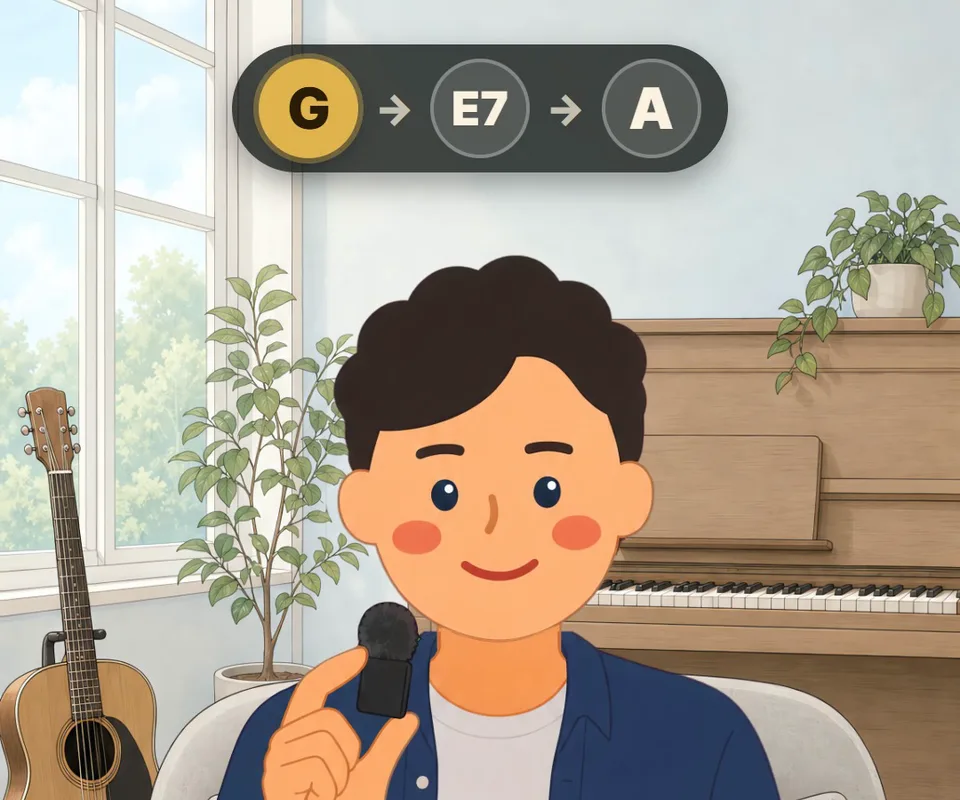
There are many ways, but the most basic is the new key's 5 chord right before the new chorus. Usually it gets about one bar, though some songs call for just half a bar or a beat or two. Going from G to A, play E — A's 5 chord — after the last G, then start the new chorus in A. E7 works too, and pulls a little harder toward the new key.
Count the 5 from the key you're going to, not the key you're in. Playing in G and moving to A, it's A's 5 chord, E — not G's 5 chord, D. Counting the new key's root as 1, go up the scale to the fifth note (do-re-mi-fa-sol), or use the table below.
- One bar (the default): G │ E7 │ A. Use it in slow and mid-tempo songs when there's room before the new chorus. The team and the congregation get time to hear the new key coming.
- Half a bar: G → E7 │ A. Play G for the first two beats of the last bar and E7 for the last two. It fits songs where a full bar would drag, or where the previous phrase ends mid-bar and only half a bar is left.
- A beat or two: G (three beats) E7 (one beat) │ A — E7 only on the last one or two beats. Use it in fast songs, or when the new chorus melody starts early, at the end of the previous bar, leaving no room. The shorter it is, the more exactly everyone has to change on the same beat, so run it in rehearsal.
- Keys: E in the left hand; voice E7 in the right with G# on top. The top note rises G → G# → A by half steps, so the lift is easy to hear.
- For singers: if the new chorus doesn't start on A, voice the A chord you land on with the melody's first note on top, so singers can find it.
| New key | 5 chord |
|---|---|
| C | G or G7 |
| D | A or A7 |
| E♭ | B♭ or B♭7 |
| E | B or B7 |
| F | C or C7 |
| G | D or D7 |
| A | E or E7 |
| B♭ | F or F7 |
| B | F# or F#7 |
Why does the 5 chord lead into the new key?
In any key, the 5 chord wants to go to that key's 1 chord. Hear the 5 and your ear waits for the 1 — because of one note inside it.
E7 is E–G#–B–D. The G# sits a half step below A, so it wants to rise to A. A note that pulls up into the root from just below is called the leading tone. The D in E7 also wants to fall a half step to C#. Since an A chord is A–C#–E, both notes resolve into the A chord, and E7 followed by A feels like arriving.
In a key change, this helps once more. There's no G# in the key of G. So when E appears while you're in G, that one G# tells the ear the key is changing, and the A that follows settles it. Jumping straight from G to A can sound abrupt, especially in a slow song; even a short 5 chord bridges the gap.
Prettier key changes — progressions for each situation
If the basic move sounds rushed, take the one-bar version and split that bar in two and add one more step. All of these go from G to A.
- D over E: G │ D/E → E │ A. Keep E in the bass; play a D chord (A's 4 chord) on top for the first two beats, then resolve to E for the last two. It opens up and then settles on E — especially smooth in slow songs. When a chart says D/E, the bass plays the letter after the slash (E). If the bass plays D, it becomes a plain D chord and the "D over E" color is lost, so make sure your bassist knows.
- Resolve a sus4: G │ Esus4 → E │ A. Play A in place of E's G# first, then drop to G#. It's easy on guitar, so it suits guitar-led teams.
- One more step (2 → 5): G │ Bm7 → E7 │ A. Pass through A's 2 chord (Bm7) on the way to the 5. It tends to sound the most natural and fits slow songs well.
| Situation | Progression |
|---|---|
| Basic (G → A) | G │ E7 │ A |
| Smoother ① D over E (G → A) | G │ D/E → E │ A |
| Smoother ② sus4 (G → A) | G │ Esus4 → E │ A |
| Slow song, one more step (G → A) | G │ Bm7 → E7 │ A |
| Fast song (G → A) | G (everyone rests on the last beat) │ A |
| Up a half step (G → A♭) | G │ E♭7 │ A♭ |
| Next song in C (G → C) | G │ G7 │ C |
| Next song in D (slow) (G → D) | G │ Em7 → A7 │ D |
| Next song in E (G → E) | G │ B7 │ E |
Fast songs often skip the bridge: everyone rests one beat together and lands straight in the new key. Every instrument has to cut on that rest, so run it once in rehearsal. Many teams use a one-bar drum fill instead (G │ drum fill │ A).
If the next song is in a nearby key like C, just adding a 7 to the current chord makes the bridge. G is already C's 5 chord, so G7 takes you to C.
Going up a half step (G → A♭) is common too, but guitarists need barre chords in A♭; for volunteer teams a whole step (G → A) is easier. For other keys, find the new key's 5 chord in the table above and move the same pattern.
3 — Watch out ① Mark the beat and chord clearly
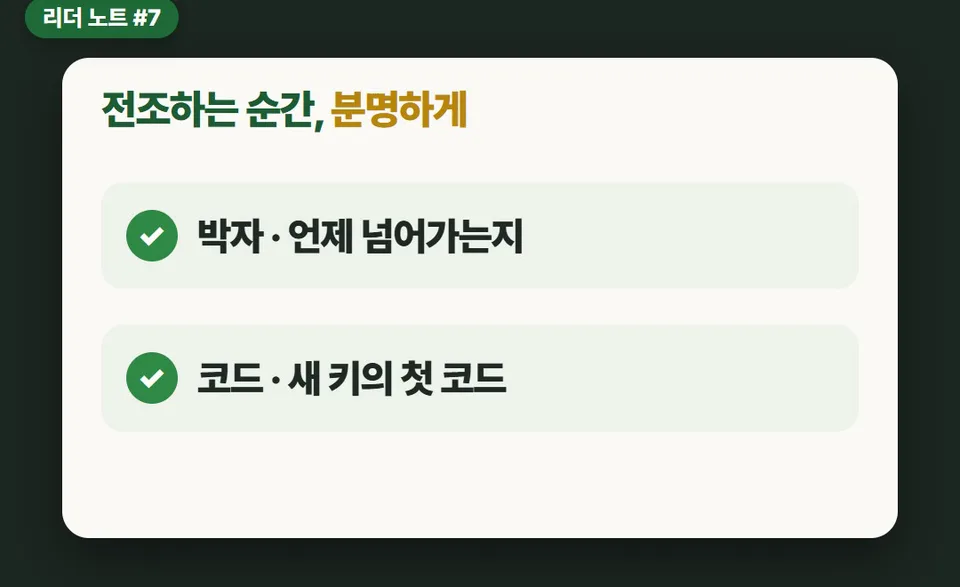
When you change key, the leader and the instruments need to mark the beat and chord of the change clearly. If the chord isn't clear, the congregation can struggle to find the new key. They follow by ear, without a chart, so they need to clearly hear when the change happens and what the new key's first chord is before they can come in together.
- Beat: play the 5 chord for its full length — a bar, half a bar, or a beat or two — and land the new key's first beat together, firmly. If the 5 chord slides by vaguely, the congregation misses where the change happens.
- Chord: keys and bass should hit the new key's first chord (A, for G → A) together and clearly. A guitar ringing out the chord plainly carries better here than a busy part.
- Leader: sing the first line in the new key clearly. The congregation follows the leader's first note.
Watch out ② Agree with the team in advance
And agree with the team in advance. If the instruments get tangled, the moment meant to add lift can break the congregation's focus instead. If the keys go up while the guitar stays in the old key, or a singer starts in the old key, the congregation stumbles there too.
- Decide in rehearsal which chorus goes up, and write it in the set or service order.
- If you might add a chorus on the spot and go up, agree on a leader signal in advance (for example, a finger pointing up). Every church differs — pick your own.
- If your team is new to this, start with one song and one spot: "This week, only the last chorus of the last song goes up, G │ E7 │ A." Run just that part two or three times before rehearsal ends.
- A common slip: the keys play the bridge chord (E7) but the guitar jumps straight from G to A, so that spot clashes. In rehearsal, have the guitar play just the E7 spot on its own, twice.
- Tell whoever runs sound or lyrics where the key goes up and how many times you'll sing the chorus.
Worship-leading tips to check alongside
Often what matters more than the key change itself is whether the new key suits the congregation. Check these when you plan the set.
- The highest note after the change: raising the key raises the top note too. If the highest note in the new key goes above D5, the singing tends to drop there. One option is to start a step lower and go up to the original key only for the last chorus — for a song originally in G, start in F and move up with F │ D7 │ G.
- Once per song: two key changes in one song are hard to follow. If you go up, the last chorus once is enough.
- Give new songs a break: leave out the key change while the congregation is learning the melody, and add it after a few weeks.
- Between songs: when you modulate into the next song, sing its first line before the congregation comes in, and they'll follow much more easily.
Write down where the key changes, in one place
Once you've decided where and to which key you're going, the whole team should see it in the same place. A note like "last chorus up to A" in a group chat gets buried, and every change adds another message — by Sunday morning it's hard to tell who's looking at old information.
In Com2Worship you can set the key for each song in this service's order and write the order in the song-form field with the new key attached to the last chorus, like "I V1 C V2 C B C(A)". Everyone viewing that service order sees the same key and form, and the live screen shows the current song's key and form at the top of the chart.
Three things to remember about key changes
Why, how, and what to watch out for. A key change is a good tool for adding lift and connecting the flow, but in the end it's there to help the congregation keep singing together. So before deciding when to go up, look at whether the congregation is singing with you right now.
Pick one spot in this week's set — the last chorus, or a move into a next song in a different key — put the new key's 5 chord in front of it (usually one bar), and run it once with the team.